
Phallic mythologies, Communism and Body Extremes at Gropius Bau
written by Gentiana Kolnrekaj
The exhibition by Marina Abramović at the Gropius Bau creates a very epic feeling: you enter a space where everything is in motion, yet nothing truly changes, because it always returns to the same core themes, the erotic in political resistance, ecological cycles and inevitability of death.
In the atrium of the Gropius Bau, there is a large screen showing women mourning in a slow, repetitive rhythm. Women of all ages wearing black traditional robes are depicted gathering on a giant screen grieving Tito. It doesn’t feel like a distant historical moment. It feels current, as if it never really ended. As you watch, you are no longer just a spectator, you begin to feel part of the scene.
Repetition, tradition, the body, and the act of seeing yourself reflected in the work keep returning throughout the exhibition. In the end, this is what Abramović’s art is all about: she represents the present through the body. And because we all have a body moving through different moments in time, we are able to recognize ourselves in her performances and in the ideas she explores.
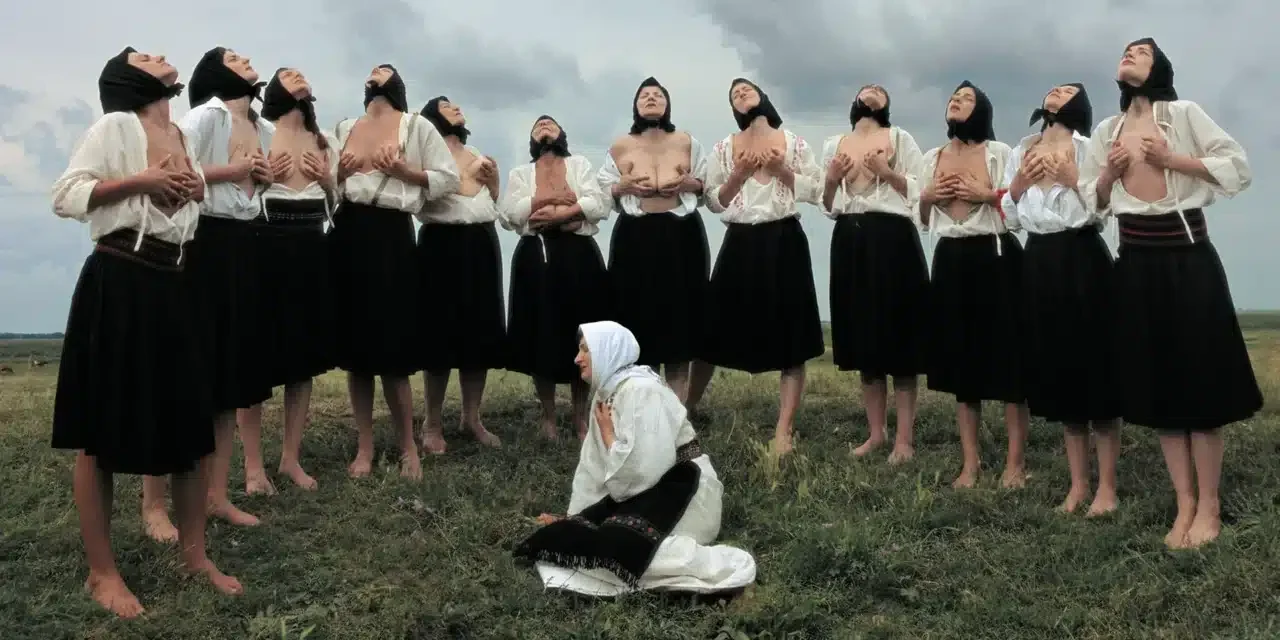
Marina Abramović, Courtesy der Marina Abramović Archives / VG Bild-Kunst, Bonn 2026
In the Balkans, and especially in Kosovo, where I come from, the body, and particularly the sexual body, has long been a taboo. It is something to hide rather than to show. For this reason, it was especially striking to encounter Magic Potions, where Marina Abramović reimagines the Balkans as a place shaped by myth. In a forest of oversized, phallic mushrooms, a Flemish scientist presents her research on the region’s sexual rituals. The scene feels surreal, almost absurd at first, but it opens up another layer of the exhibition.
Here, the body is no longer contained or silenced, as I was used to when growing up, but expanded, exposed, and even exaggerated. And yet, this shift does not feel like a break. Instead, it reveals a different side of the same cultural background, one that is less visible, but still present.
The exhibition also includes some of her earlier performances, among them Thomas Lips, performed in 1975. It marks one of the most extreme moments in the portfolio of Marina Abramović work, where the body is pushed beyond its limits.
A combination of video recordings, reference photos from the original performance and objects used during the same are displayed in the gallery, making the past visible: The honey, the wine, the metronome, the whip, the incision of the five-pointed star on the stomach, the table and the ice cross all re-appear.
Finally, in another video performance from 2002, we see a very different Marina Abramović from Thomas Lips. She lies naked, and on top of her rests a human skeleton. Soleily depicting death in contact with life, the viewer eventually seems to breathe at the same rhythm as the artist's body.
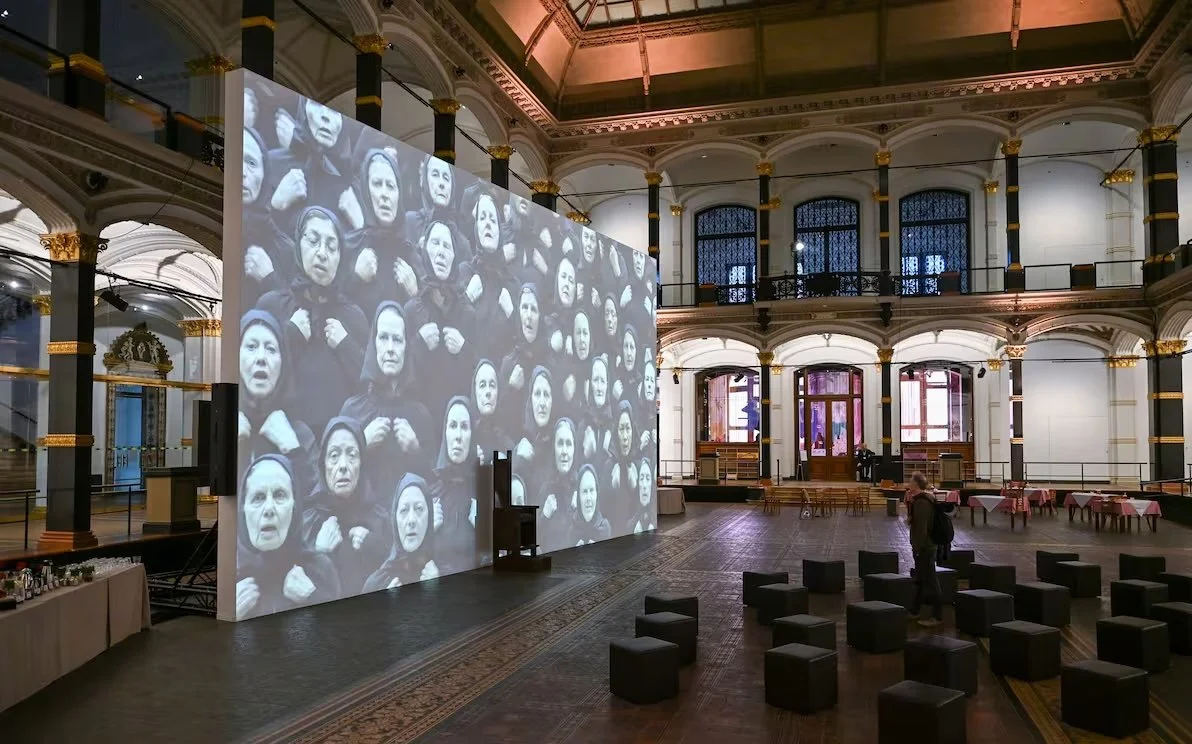
View of the exhibition “Marina Abramović: Balkan Erotic Epic” at the Gropius Bau, “Tito’s Funeral” in the atrium.
Source: Jens Kalaene
The work is inspired by a Tibetan Buddhist practice in which monks sleep next to the dead in order to overcome the fear of dying, training the mind to remain present with the reality of impermanence.
The exhibition is one of a kind, bringing together both early and recent performances, presented in an organic way within the Gropius Bau. Definitely worth a visit.
Marina Abramović - Balkan Erotic Epic - Gropius Bau
April 15, 2026 - August 23, 2026
